




5 Common Vacuum Pump Problems –
And How VacAir Superstore Can Help You Fix Them
Vacuum pumps are critical parts of many industrial systems — packaging, printing, woodworking, plastics, medical and laboratory processes, and more. When pumps fail or underperform, production grinds to a halt and repair bills escalate.
At VacAir Superstore — with over 30 years of experience supplying parts, service kits, refurbished pumps and full repairs from our ISO 9001:2015-certified workshop in Leeds — we see the same recurring problems crop up. Below are five of the most common faults, their causes, and how you can fix them (often using spare parts or services from us).
1. Incorrect Supply Voltage & Motor Wiring
One of the most frequent (and expensive) problems we see is pumps being wired incorrectly for the incoming mains supply. If the motor is not set up for the correct voltage or phase, you can quickly overheat or destroy the motor.
Typical symptoms
- Motor runs very hot from the start
- Breakers or overloads trip immediately or within seconds
- Motor windings test as burnt or shorted
What you should do
- Check the motor plate – not just the pump plate
The correct voltage, current and wiring configuration will always be on the motor nameplate. Many three-phase motors can be configured for two different voltage ranges (e.g. 230/400 V). Match this to the supply. - Confirm supply details before connecting
- Single-phase or three-phase
- Actual supply voltage on site (not just “what it should be”)
- Frequency (normally 50 Hz in the UK)
- Verify rotation direction
Once a qualified electrician has connected the motor, they should “blip start” the pump (with inlet/outlet open to atmosphere) to confirm rotation matches the arrows on the fan cowl or housing.
Important: All electrical work must be carried out and verified by a suitably qualified commercial electrician in accordance with UK regulations (such as the Electricity at Work Regulations 1989).
How VacAir Superstore can help
- Replacement motors and motor rewinds
- Technical datasheets and wiring diagrams from OEMs where available
- Workshop testing of motors and pumps removed from site
If you suspect a motor has been damaged by mis-wiring, we can test and quote for repair or replacement.
2. Pump Keeps Tripping the Breaker
Another common complaint is: “The pump keeps tripping the breaker”.
Typical causes
- Breaker / overload set too low for the motor’s rated current
- Mechanical resistance inside the pump – seized bearings, metal-to-metal contact, broken vanes, contaminated oil
- Incorrect supply voltage causing over-current
- Phase loss or poor connections on three-phase supplies
First checks
- Compare breaker rating to motor plate
If the motor is rated at 8 amps and someone has installed a 6amp breaker, breaker tripping is inevitable. Ensure overloads and breakers are sized correctly for the motor’s full load current. - Check for recent changes
- Has the pump just been installed or moved ? A motor typically needs a motor rated breaker, allowing for increased amps at start up.
- Has it suddenly started tripping after months/years of normal running?
Sudden change usually points to a developing mechanical problem.
- Inspect the pump internals (after isolating power)
A competent engineer should:- Remove covers and check for broken vanes, scoring, or metal-to-metal contact
- Check bearings for roughness
- Look for contamination or sludge in the oil on lubricated units
How VacAir Superstore can help
- Full strip-down, inspection and test in our ISO 9001:2015 workshop
- Replacement bearings, gaskets, vanes, and complete repair kits from stock
- Advice on whether a repair is economical versus a refurbished or new unit
We handle repairs and overhauls for most major brands and can turn around critical breakdowns quickly where parts are available.
3. Loss of Vacuum or Pressure
A noticeable drop in vacuum level or pressure is often the first sign that the pump is not being maintained as it should.
Common causes
- Blocked or restricted inlet filters
- Clogged exhaust filters or oil separators
- Worn or sticking vanes in rotary vane pumps
- Air leaks in the pipework or system
- Contaminated or incorrect grade of oil in lubricated pumps
Quick checks you can do
-
- Inspect and test your filters
Cleaning an air filter might buy you a short amount of time, but replacement is usually the correct fix. - Check vacuum at the pump inlet
Put a gauge as close as practical to the pump inlet. If the pump reaches good vacuum at the inlet but not at the process, the issue is likely in your pipework, valves or equipment – not the pump. - Check vane condition (rotary vane pumps)
Worn, chipped, cupped or sticking vanes are a very common cause of poor performance and eventual seizure. Minimum vane height differs by model; check the manufacturer’s data or speak to us if unsure. - Look for leaks
- Inspect and test your filters
-
- Suspect areas include:
-
-
-
- Connections at the pump, including hose and pipe connections
- Joints in the pipework to the application
- Connections at the application
- Even small leaks can have a big impact on performance.
-
-
How VacAir Superstore can help
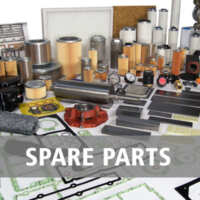
VacAir Superstore holds extensive stocks of vacuum pump replacement parts, including:
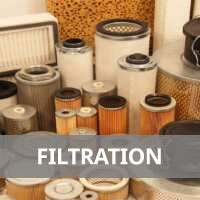
- Inlet filters and housings
- Oil separators and exhaust filters
- Carbon and composite vanes (including our cost-effective aftermarket range)
- Gaskets, seals and service kits
We can also supply refurbished or new pumps if your existing unit is beyond economical repair.
4. Oil Misting From the Exhaust
Oil mist from an exhaust silencer or outlet is not only messy – it’s often a sign something is wrong in an oil-lubricated rotary vane pump.
Typical causes
- Pump running open for long periods, oil lubricated pumps run best at the deepest vacuum achievable.
- Saturated or poor-quality oil separators
- Blocked or contaminated float chamber or scavenge line
- Overfilled oil or incorrect oil grade
Practical steps
- Check operating vacuum level
Many lubricated vane pumps are designed to run best at deeper vacuum. Running them continuously at shallow vacuum with lots of air throughput can push more oil into the exhaust stream. - Inspect and replace oil separators
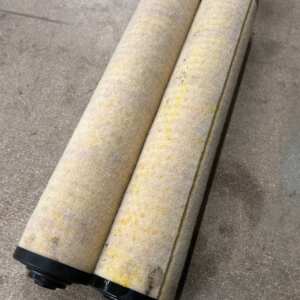
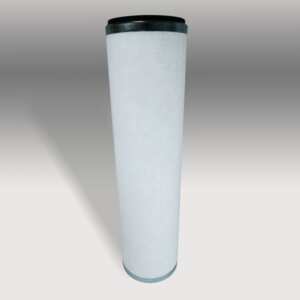
Oil separators are consumables. Over time they saturate and can no longer coalesce and return oil effectively – the oil then passes straight out as mist. Replace them at the intervals recommended, or sooner if you start to see visible misting. - Check the float chamber and scavenger line
A clogged scavenge line will prevent oil returning to the working chamber, leading to:- Poor lubrication
- Overfilled separator housing
- Oil being blown out with exhaust gas
- Verify oil level and grade
Overfilled oil sumps or unsuitable oil can increase carry-over and generate excess mist.
How VacAir Superstore can help
We specialise in filters and oil separators and supply high-quality, cost-effective equivalents for many OEM part numbers.
We can:
- Cross-reference your existing separator numbers
- Recommend suitable change intervals based on your duty cycle
- Supply compatible vacuum pump oils and advice on grades for different brands and applications
If you’re already seeing oil in the exhaust, it’s a good time to review both filtration and maintenance intervals.
5. Unusual Noises: Clicking, Chattering & Screeching
Vacuum pumps are mechanical machines – some noise is normal. However, new or changing noises nearly always indicate something that needs attention.
Normal noises
- A light clicking noise as vanes drop out of the rotor on start-up (especially dry pumps)
- Slightly higher pitched sound when running in new vanes or a freshly rebuilt pump
Noises that need investigation
- Loud screeching that does not settle after a short run-in period (upto 48hours for carbon vanes)
- Heavy knocking or clattering from the pump or motor
- Rhythmic ticking that changes with load
- Sudden increase in overall noise level compared to usual operation
These can suggest:
- Worn or damaged bearings
- Metal-to-metal contact between rotor and end shields
- Broken or sticking vanes
- “Corrugation” of the cylinder wall on high-hour pumps
- Loose or worn couplings or misalignment between motor and pump
How VacAir Superstore can help
Our factory-trained engineers work daily on Becker, Busch, DVP, Elmo Rietschle and many other pumps. We can:
- Listen and advise based on your description or video
- Strip and inspect the pump in our workshop
- Replace bearings, vanes and other internal components
- Repair or replace components worn due to mechanical pick up ( metal to metal wear)
- Provide a written test report and performance results after rebuild
If you notice a new noise, it’s far cheaper to investigate early than wait for a full seizure.
Repair vs Replacement – What’s Best for You?
Sometimes a pump is a clear candidate for repair; other times a replacement (new or refurbished) will be more economical.
We typically look at:
- Age and model of the pump
- Condition of key components (pump body, rotor, end shields, housing)
- Cost of required spares and labour
- Availability of equivalent refurbished or new units
VacAir Superstore holds an extensive stock of refurbished vacuum pumps and new pumps, alongside thousands of spare parts, meaning we can quote options side by side – repair, refurbished exchange, or new.
Why Choose VacAir Superstore for Your Vacuum Pump Repairs?
- Factory-Trained Engineers: Our team is trained directly by the original equipment manufacturers (OEMs), giving us unparalleled knowledge.
- Guaranteed Quality: All our repairs and services are quality-assured to ISO9001:2015 standards.
- Loan Pump Service: To keep your production running, we can provide a loan pump while your unit is in for repair.
- Cost-Effective Solutions: Our independent status allows us to offer competitive pricing, often keeping repair costs significantly lower than expensive replacements.

Written by VacAir Engineers
Reviewed by Vacuum Pump Service Team



Trust VacAir Superstore for all your vacuum pump needs.
Contact us today to learn how we can help you save money and keep your operations running smoothly.
