




Becker VTLF 2.250 vane WN124-196 90136701005
Technical Specifications:
Pump Model : Becker VTLF 2.250
OEM Ref : 90136701005
Vane code : WN124-196
VacAir replacement code : VA901367
Pack Quantity (sold individually) : 5
Material : Carbon graphite
Dimensions (mm) : 355 x 65 x 5
Stock Status: Currently in stock


Becker VTLF 2.250 Vane WN124-196 | 90136701005 Carbon Graphite Vane
Replacement carbon graphite vane set for the Becker VTLF 2.250 dry running rotary vane vacuum pump.
OEM Part Number: 90136701005
Vane Code: WN124-196
VacAir Replacement Code: VA901367
Dimensions: 355 x 65 x 5 mm
Quantity Required Per Pump: 5 vanes
Material: Carbon graphite
Becker VTLF 2.250 Carbon Vane Specifications
| Pump Model | Becker VTLF 2.250 |
| OEM Part Number | 90136701005 |
| Vane Code | WN124-196 |
| VacAir Code | VA901367 |
| Dimensions | 355 x 65 x 5 mm |
| New Vane Height | 65 mm |
| Minimum Wear Height | 40 mm |
| Quantity Per Pump | 5 vanes |
Looking For Becker Vane WN124-196?
The Becker VTLF 2.250 uses carbon vane WN124-196, OEM part number 90136701005.
Many engineers identify this vane using the edge marking WN124-196 rather than the full Becker spare part number, as original Becker vanes are often marked with the vane code only.
This same carbon graphite vane is also used in a range of other Becker VTLF, DTLF and DVTLF vacuum pump models.
View the dedicated WN124-196 / 90136701005 vane page for full compatibility information and vane identification details.
How To Identify Becker Vane WN124-196
This Becker vane can be identified by:
- Becker OEM Part Number: 90136701005
- Vane Edge Code: WN124-196
- Dimensions: 355 x 65 x 5 mm
- New Vane Height: 65 mm
- Minimum Wear Height: 40 mm
Parts diagrams are not always available and may not show both the Becker part number and the vane code. If you have removed the vane from the pump and can see WN124-196 on the edge, this is the important identification code for this vane.
When Should Becker VTLF 2.250 Vanes Be Replaced?
Carbon vanes are normal wear components inside Becker dry running rotary vane vacuum pumps.
A new Becker WN124-196 vane measures 65 mm in height. The minimum recommended wear height is 40 mm.
Once the vane height approaches the minimum wear point, replacement should be planned to help maintain vacuum performance and reduce the risk of unnecessary internal pump wear.
Vanes should also be replaced if there are signs of:
- Cracking
- Chipping
- Cupping
- Uneven wear
- Edge damage
- Abnormal carbon dust build-up
If you are unsure whether your vanes need replacing, you can contact VacAir with the vane dimensions or photographs and our technical team can advise.
Common Signs Of Worn Becker Carbon Vanes
Worn carbon vanes are one of the most common causes of reduced performance in Becker dry running rotary vane vacuum pumps.
Typical symptoms include:
- Reduced vacuum level
- Poor CNC vacuum hold-down performance
- Longer evacuation times
- Reduced airflow
- Increased pump noise
- Increased operating temperature
- Carbon dust inside the pump
- Reduced machine performance
If your Becker VTLF 2.250 has gradually lost vacuum performance, worn vanes should be inspected before more serious internal damage occurs.
Why Do Becker Carbon Vanes Wear Out?
Carbon vanes gradually wear during normal operation. Excessive or accelerated vane wear can be caused by:
- Blocked inlet filters
- Dust contamination
- High operating temperatures
- Excessive vacuum loads
- Restricted airflow
- Poor maintenance
- Internal pump wear
In CNC woodworking and vacuum hold-down applications, dust contamination and blocked filters are common causes of accelerated vane wear.
Replacing Becker VTLF 2.250 Carbon Vanes
Many maintenance engineers and factory service departments replace Becker carbon vanes in-house as part of routine pump servicing.
When replacing vanes, it is good practice to inspect:
- Rotor condition
- Cylinder condition
- Bearing condition
- Inlet filter condition
- Relief valves
- Signs of overheating
- Signs of contamination inside the pump
Replacing vanes without correcting the underlying cause of wear may reduce vane life and result in continued performance issues.
VacAir can supply replacement vanes, service kits and technical support for Becker vacuum pump maintenance.
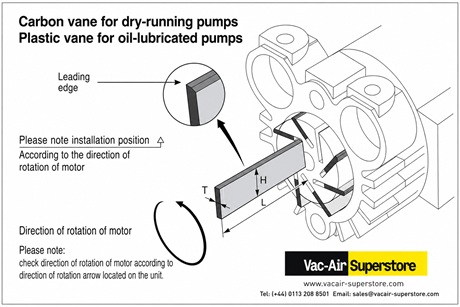
Vane Installation Diagram
Fits These Becker Pump Models
This vane is suitable for Becker pumps requiring vane code WN124-196 or OEM part number 90136701005.
This includes several Becker VTLF, DTLF and DVTLF models.
For the complete compatibility list, see our dedicated WN124-196 / 90136701005 vane page.
UK-Wide Becker Vane Supply & Technical Support
VacAir supplies Becker carbon vanes throughout the UK including Leeds, Manchester, Birmingham, Sheffield, Nottingham, Liverpool, Bristol, Glasgow and London.
Whether you require replacement vanes, service kits, technical advice or Becker vacuum pump repair support, our team can help identify the correct Becker parts for your pump.
Call: 0113 2088501
Email: sales@vacair-superstore.com
Related Becker Maintenance Support
Frequently Asked Questions
What is WN124-196?
WN124-196 is the identification code commonly marked on the edge of Becker carbon vane 90136701005.
What is the Becker part number for WN124-196?
The Becker OEM part number is 90136701005.
What size is Becker vane WN124-196?
The vane dimensions are 355 x 65 x 5 mm.
What is the minimum wear height for Becker WN124-196 vanes?
A new vane measures 65 mm in height. The minimum recommended wear height is 40 mm.
Can I replace Becker VTLF 2.250 vanes myself?
Many maintenance engineers replace Becker carbon vanes in-house. The pump should also be inspected for filter condition, contamination, cylinder wear, bearing condition and abnormal wear patterns during servicing.
Why has my Becker VTLF 2.250 lost vacuum?
Common causes include worn vanes, blocked filters, air leaks, dust contamination, overheating and internal pump wear.

